Welcome back, educators

I’m James Alan Sturtevant, a classroom teacher, author of You’ve Gotta Connect, and host of the Hacking Engagement podcast. This site is where I collect practical ideas for building real relationships with students and keeping classroom energy high year after year.

What you will find here

Scroll the latest episodes and posts below. Each one highlights a guest, a tool, or a strategy you can try in class the next day. New on the site: the Classroom Bell Ringers That Build Student Connection guide lists five opening routines you can run tomorrow. For the full podcast catalog, visit Hacking Engagement. For print resources, see My Books. To learn more about my background or get in touch, use About Me and Contact.

  • Episode notes with classroom-ready takeaways from teachers across the country
  • Honest stories from my own years in the classroom and in sales (and back again)
  • Audio links so you can listen on Spreaker and share episodes with colleagues

The archive stretches back to the early days of the show. Start with the newest posts on this page, then use Older posts or the Archives sidebar when you want to dig deeper.

127-Maybe, You Should Become an Instructional Coach…Staring Michael Brilla

When I was in my early 30’s, I got the 7-year-itch. NO, NO, NO…not to split from the lovely Mrs. Sturtevant, far from it. I was questioning my commitment to education. I was an ambitious competitive young guy. My college peers were climbing corporate ladders. They were wearing suits to work and bringing in some serious bank. They seemed so much more adult.

I’ve always been goal-oriented, which was fine for the first few years in teaching when I was still figuring out the job. But my early 30’s I found myself wondering, Can I be satisfied doing this till my mid-50’s?

I’ve always been a person of action and so I determined it was time to take some. I left Education to become a salesperson in the private sector. I reasoned that I possessed a good skill set for sales. I was right, but guess what? I was miserable in my new role. On my hasty exit from my classroom, I totally failed to inventory the wondrous positives of being teacher. I was a popular guy in my school and I loved my students. The first 5 minutes of every class was always devoted to bonding. I would describe what was going on in my life and the students would share about their existences. I totally took this magnificent bond with my students for granted. In the private sector, no one cared what I was reading, what workout I was doing, or what I made Mrs. Sturtevant for dinner the previous night. Instead my interactions were highly transactional.

After a 1-year sales gig, I hightailed it back to the classroom. It was so good to be home. It was a magnificent learning experience that I still value and it helped me become a much better and more content educator.

But my early frustrations with teaching were certainly not unique. Let’s face it, teaching doesn’t possess many extrinsic motivators. I don’t know that that is necessarily a bad thing. Merit pay has never really delivered on its mythical promises. But there are darned few career advancement opportunities. You could become an administrator, a head coach, a department head, or a guidance counselor. If you’re ambitious, you must content yourself with creating the best classroom experience for your students. That’s wonderful objective, but perhaps, we need some more options.
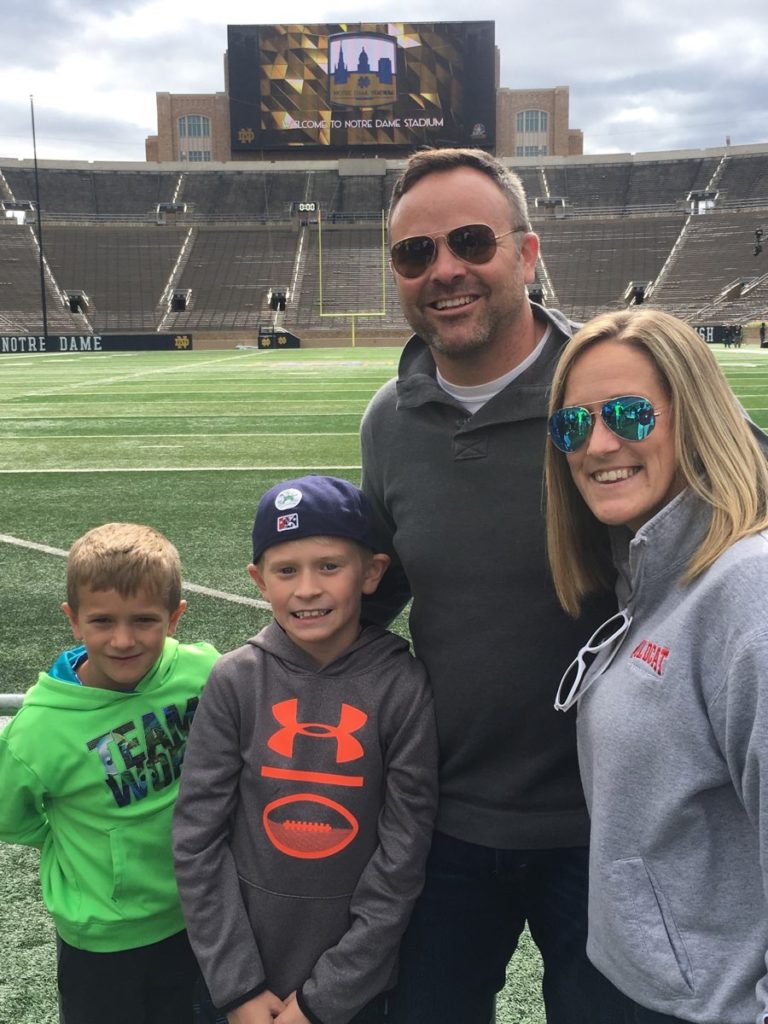
Michael Brilla and his beautiful family

And this dear listener is where my buddy Michael Brilla walks on the Hacking Engagement stage. Michael is a passionate social studies teacher who’s been on this program before. He starred on Episode 105 promoting StoryMaps as a marvelous platform. I loved his energy and I utilize StoryMaps every semester, even with my college students. Michael is creative and ultra-approachable. His students just love him. So why in the world would he leave his magical classroom and assume a new role? Please stay put dear listener and learn the what, the why, and the how. Who knows you might come up with an idea to explore this new year.

Episode Template

The Problem:

Teachers sometimes feel stuck in the job with few opportunities for career advancement.

The Solution:

In a patient and long-term way begin to explore options.

What you can do Tomorrow:

  • Inventory all the amazing things about being a classroom teacher.
  • Inventory your strengths.
  • Begin networking with colleagues and administrators about opportunities.
  • Assume an open-mind about new roles.

Please, always count your blessings as a classroom teacher, but don’t neglect to explore professional opportunities. Who knows, perhaps a new rewarding and important role might be in your near future, if you’re open-minded enough recognize it.

Listen to “127-Maybe, You Should Become an Instructional Coach…Starring Michael Brilla” on Spreaker.

126-Joce McBurney-Buell Will Make you Feel a Lot Better About the Future of Education

I once had a veteran colleague lament about the state of teaching. He meditated, WIth all the that they’re making us do, if I was in college today, there’s no way I’d major in Education. Apparently, he’s not alone in this sentiment. If one searches “Decline in Education Majors”, one will find plenty of evidence that many undergrads feel exactly as my colleague expressed. Here’s a link to 2019 Forbes article which relies heavily on data from the National Center for Education Statistics. Over the past decade, Education has suffered the largest exodus compared with other majors–a decline of 19%. While I’m sad that declining numbers of young Americans consider teaching a wonderful career path, this phenomenon does create wonderful opportunities for potential teachers. In the future, jobs may be easier to secure. Teacher pay may have to increase because of supply. This episode will feature one of these aspiring teachers–Joce McBurney-Buell.

Joce McBurney-Buell [email protected]

Last summer, I traveled to Muskingum University to meet with the my dear friend the outgoing Department Chair Rae White. In the midst of our day, she invited me to lunch in the gymnasium which was hosting freshmen students who were also being oriented to campus. Rae and I plopped down at a table full of young people to break bread. Seated beside me was a young woman who seemed to know a lot more about Muskingum than an incoming freshman. As you probably guessed, Joce was my table neighbor and was about to embark on her junior year. She was on campus that day to help ease freshmen with their significant transition from home and high school. As we interacted, I was thrilled to learn that Joce is an Education major. As I observed her and interacted with her, it became quickly apparent that this young women had it going on. I just knew–and it’s been confirmed by future interactions, that she was destined to present to my Intro to Education students, which she did last week, and appear on my podcast, which is this episode.

We’ll discuss her goals and motivations, but what really excites me is what Joce represents. Students such as her point to a bright future in American education. The young people that I interact with in the Education major are excited, driven, and passionate about the calling. Don’t get too discouraged about the Forbes article. There are some magnificent young teachers on the horizon.

Episode Template

The Problem:

Education is not an attractive major to many young Americans.

The Solution:

Open your room to aspiring teachers.

What you can do Tomorrow:

  • Indicate to your administrator that you are open to aspiring teachers being part of your class.
  • Reach out to your local institutions of higher learning that have education as a major and communicate this openness.

Someone helped you get to where you are today. Please be a mentor for an aspiring teacher. And you just might find, if you help a student like Joce, that you’ll learn as much from her as she’ll learn from you.

Listen to “126-Joce McBurney-Buell Will Make you Feel a Lot Better About the Future of Education” on Spreaker.


125-The Remind App is Transformational…Starring Taylor Clemons, Rader Felumlee, and Macy McAdams

2 years ago, I was teaching high school and our building principal setup the Remind App for our staff. I must confess that at first I found the app annoying. The flurry of messages I was receiving from our fearless leader was invasive. Granted, many of the messages were germain to being a teacher at our school and some of them were essential such as, We’re on a 2-hour delay and Don’t forget, I’m observing you tomorrow. Grudgingly, I began to acknowledge the value of this new mode of communication and collaboration.

This fall, I embarked on a new education journey as an adjunct at Muskingum University. I decided to give Remind a try with my students. I quite simply embraced the old cliché, When in Rome, do like the Romans. Over the past decade, I’d experienced the frustration of unrequited emails sent to students. Young folks aren’t big fans of emails, but they text the hell out of one another. Remind embraces this proclivity. The messages come through the recipient’s device as a text and the receiver can then respond. But Remind isn’t just a group thing. Teachers can message students or parents individually and then carry on conversations just with them.

On its surface, Remind may seem like it’s ripe for inappropriate communication between students and teachers. If those anxieties are stirring in you, please visit this page to read what Remind has to say about its commitment to security and protecting students.

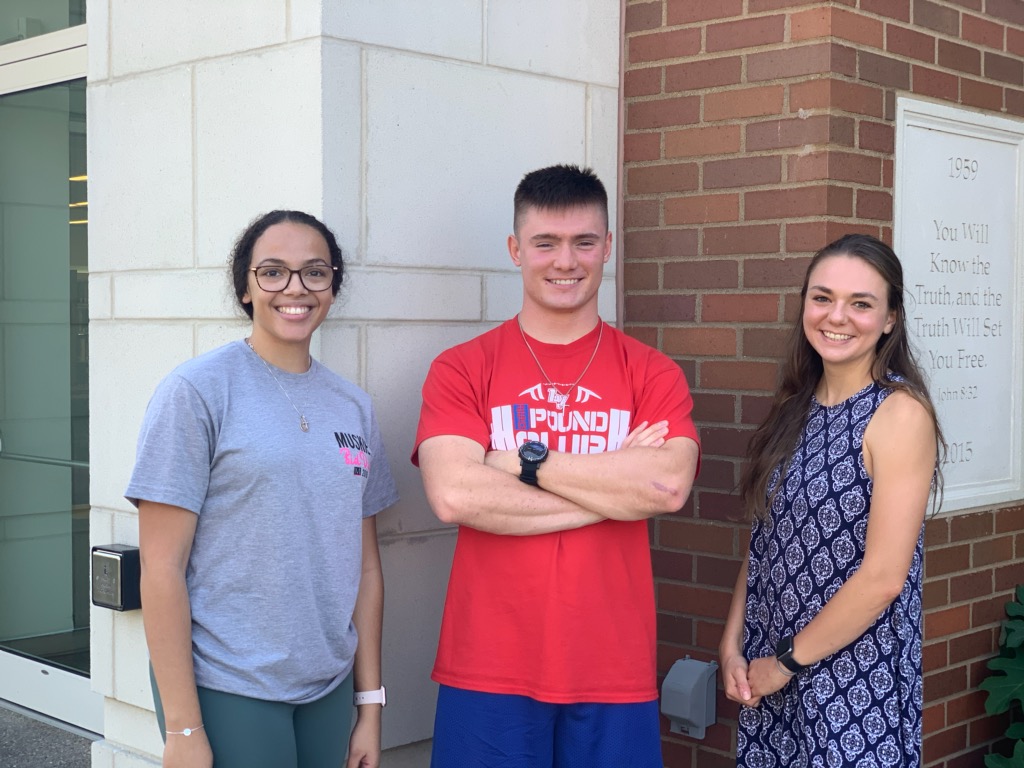
To help describe how this app works from the student perspective, I conscripted some of my current primary sources. Taylor Clemons, Rader Felumlee, and Macy McAdams are my current students. These magnificent future teachers will also speculate on how they’ll utilize this app in their eventual classrooms.

Taylor Clemons, Rader Felumlee, and Macy McAdams

Episode Template

The Problem:

Student-teacher communication needs to be improved.

The Solution:

Setup the Remind App in your classroom.

What you can do Tomorrow:

  • Study the Remind App.
  • Check with your principal to see if using Remind at your school is kosher.
  • Create a small test group of students or parents and try it for a couple of weeks.

Remind transformed the way I communicate and collaborate with my students. It has the same potential for your class.

Listen to “James Sturtevant Hacking Engagement” on Spreaker.

124-Rethinking Deadlines…Starring Josh Frame

Last year, I was teaching high school and our administration assigned a book study to the staff. We read and collaborated on 15 Fixes for Broken Grades by Ken O’Connor. This iconic book is an interesting and provocative read. It challenges standard operating procedure in terms of the way students are assessed. The fix that stirred the pot the most amongst our faculty was Fix #2:

Don’t reduce marks on work that is submitted late

In the program, I mistakenly refer to Fix #2 as Fix #4. On its face, Fix #2 makes sense. You don’t want to punish a behavior academically. But, wouldn’t Fix #2 encourage procrastination and irresponsibility?

Interestingly enough, during my first day this past week with my college students, i challenged them to collaborate in groups on the creation of class norms. One topic that all struggled with was how to deal with late work. To a group, students were in favor of score reduction. I found this fascinating and so we embarked on a magnificent tangential conversation on should an instructor, which they all hope to be one day, punish a behavior academically? The ensuing conversation caused a titanic paradigm shift in many of my students. This episode might be similar to the discussion in my class last week in the sense that you might think about this issue differently.

I’ll discuss this fascinating idea thoroughly this week with Josh Frame. Josh is a middle school principal and he embraces the idea that students should not suffer academically for behaviors.

Josh Frame

We’ll talk about how he sold this idea to his staff, how he managed the pushback, and how he’s adapted his school’s response to students who are not appropriately pursuing learning. Here are some outstanding links Josh shared:

The BWMS Intervention Program

BWMS Skills for Success

BWMS Grading Practices

This is a fascinating discussion that may leave you with unanswered questions, but hopefully might inspire such conversations at your school.

Episode Template

The Problem:

Students are being punished academically for behaviors.

The Solution:

Embrace Ken O’Connor’s practice of not reducing marks on work that is submitted late.

What you can do Tomorrow:

  • Inventory your school’s policies on late work.
  • Consult with your principal about Ken O’Connor’s book.
  • Create an ultra-engaging prompt.
  • Assign students the prompt and explain that you’d like their completed work on Friday, but also indicate that you’ll not reduce their scores if it’s late. Just make certain they understand that they are required to complete it.
  • Sit back and evaluate what happens.

Punishing kids academically for a behavior is wrong. Let’s explore ways that we can inspire students to learn without this destructive practice.

Listen to “124-Rethinking Deadlines…Starring Josh Frame” on Spreaker.


123-The Landing Pad…Facilitate a Highly Collaborative Classroom

I wanted to produce an episode before school started and I wasn’t sure if it was going to materialize. Starting next week, I’ll be teaching all new classes, at a new school, and at the college level. It’s been a busy summer, but I’m excited to embark on my next teaching journey. 

This episode is short and simple, but it has tremendous potential to positively impact the way your class operates and student learning. 10 years ago, my room was cluttered. My wife has a label for people like I was…He’s a piler. That label was true. I did have a lot of piles of paper stacked in chaotic places around my room. I wasn’t proud of this, but when all of my students filed into my class each morning and the day just erupted into frenzied activity, my energies turned towards engaging them and not organizing the flurry of papers that I distributed and then collected.

This unsatisfactory situation changed when my school started using Google Drive. The piles of paper disappeared, my drive was organized and easily accessed, and my uncluttered room took on a Feng Shui-like character. I was transformed into such a paperless fan that I decided to create a Landing Pad for many assignments. This virtual collaboration igniter is what I’ll highlight in this episode. It’s not revolutionary, but it’s powerful. I thought it would be useful to share a great and simple idea on the last week of summer vacation.

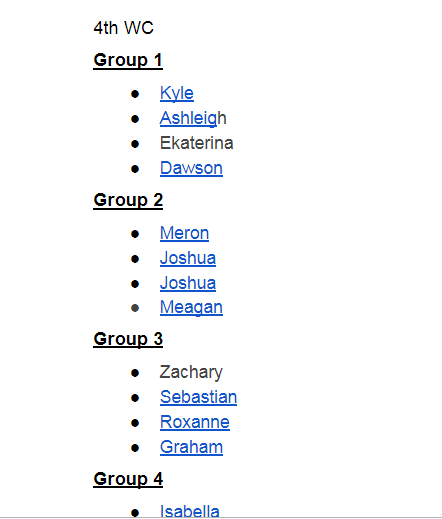
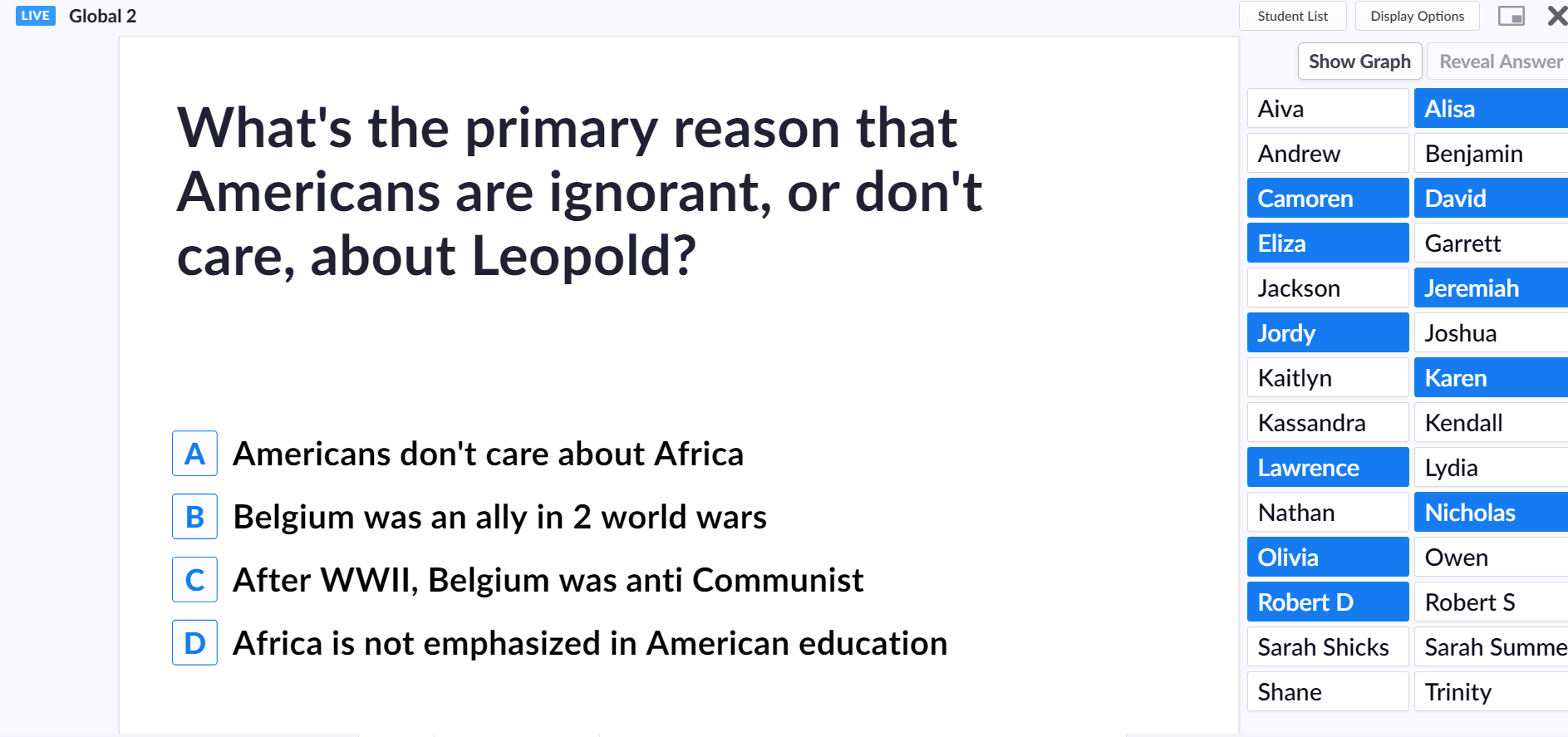
My Landing Pad is merely a Google Doc that contains my class roster. The students are listed in alphabetical order by their last names. You keep this doc in your drive and merely make a copy when you decide to use it. I frequently sort my students into groups. You take the Landing Pad copy and sort the students accordingly. Then, you must change the sharing settings so the document is editable and then share the link with students. Once students have created something, be it a narrative, a Google Drawing, a virtual timeline, an image, or a video, they merely copy a link for their creation, highlight their name on the Landing Pad, and then insert the link. All of a sudden, their name turns blue! Here’s an image of a Landing Pad from my class. 

Notice that a few students did not complete the assignment. They are still in black. I removed the last names for privacy sake, but if they were still there, you would have also noticed that the students were no longer in alphabetical order. I arranged them for this activity. 

Here are advantages to utilizing such a system   

Paperless:

Students don’t lose the prompt, or their creations. As long as they have technology and internet, they have anywhere, anytime access.

 Collaborative:

In the Landing Pad highlighted in the image, it was a jigsaw activity. Each student was to research an aspect of our topic then enlighten the peers in their group. Because a few kids did not complete the task (their names are still in black on the image), members of short-handed groups merely opened links from other groups and learned what they needed. They could even invite the creator of the link to their group as a goodwill ambassador who could enlighten them about the aspect that their group is missing.   

Accountability:

It’s painfully obvious who’s done the work and who has not. Teachers know before class starts whom they have pull aside for remediation. 

Management:

I once lost a student’s project. Or, at least I think I lost it. The kid swore he turned it in. I had my doubts, but me losing a paper was certainly plausible. This scenario is now a relic. I know exactly who’s turned in their work and I never walk out of the building carrying a load of papers that I’m going to have to lug back to school the next morning. 

Facilitates Learning: 

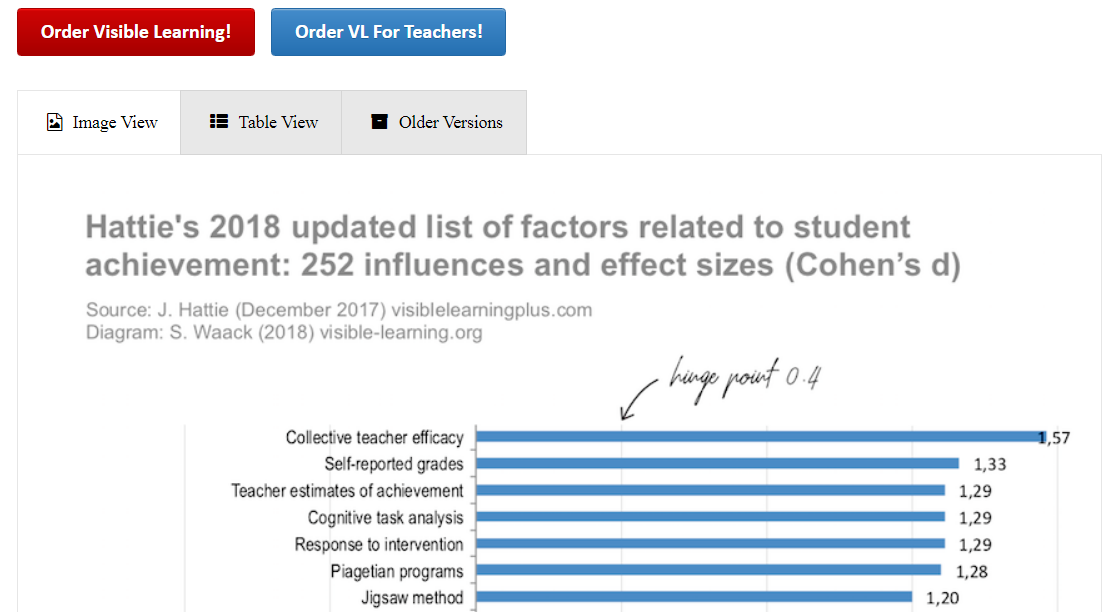
Influential Austrailian researcher John Hattie’s focus is influences on student achievement. His 2018 List is comprised of 252 influences on student learning. The Jigsaw method is number 7! A Landing Pad is a perfect way to facilitate such learning. 

Episode Template

The Problem:

Students need a simpler way to turn in work and collaborate.

The Solution:

Utilize a virtual Landing Pad.

What you can do Tomorrow:

  • Create a Google Doc of your class roster.
  • Make a copy, then rearrange the names into groups of your liking.
  • Make the doc editable. 
  • Share the link with students and direct them to highlight their names and then insert a link for their completed work.
  • On the collaboration day, encourage students to access links of classmates outside their group to fill in any gaps. 

Please try a Landing Pad this semester. Wouldn’t you like to walk out of school empty-handed? 

Listen to “James Sturtevant Hacking Engagement” on Spreaker.

122-Embrace the Marginalized…Starring Fatima Dahir

Fatima Dahir

There’s a significant potential that 2 things may happen when you return to school in a couple of weeks:

  • Your classroom may be more diverse
  • Donald Trump’s Send her back tweet may just come up in class discussion

In terms of diversity, the demographic trends towards a browner America are indisputable. Here’s a link to an Axios article that cites the Census data. Sadly, many American schools both urban, suburban, and rural are defying this trend and remaining largely monochrome. If you teach in such a school, you do your students no favors by ignoring America’s increasingly diverse trajectory. Your students will most likely work in highly diverse environments in the future. And if you teach in such a school, you also have a moral obligation to make certain that students whom are different are not marginalized.

Fatima Dahir certainly felt different when she entered her largely, white and conservative public middle school classroom in suburban Columbus wearing her hijab. Today, she’s thriving as a student leader at Ohio State University, but middle school was brutal. In this episode, she’ll talk about her significant struggles, along with her social and academic metamorphosis. She’ll discuss how teachers can embrace ostracized students. She’ll also provide interesting perspective on the controversial statements by Donald Trump and how an educator might cope with classroom debate inspired by this issue. Please listen. This is an important show!

Episode Template

The Problem:

Some students feel marginalized.

The Solution:

Bond with those kids and subtly encourage their classmates to do the same.

What you can do Tomorrow:

  • Conduct a mental inventory of students whom you suspect are excluded
  • Intentionally begin the bonding process with those youngsters
  • Experiment with ways that you can facilitate broader peer acceptance for those kids
  • Strategize ways to keep debate in your classroom civil

Chances are, that if you’re listening to this podcast that you’re a popular teacher. When esteemed teachers reach out to struggling students it can open the door to peer acceptance. Go for it!

Listen to “122-Embrace the Marginalized…Starring Fatima Dahir” on Spreaker.

121-Teacher-Well Being…4 Learning Targets for the Fall

Even though it’s only June, start thinking about specific ways to create an outstanding school year next fall. That’s what I’ve done throughout my career. Summer gives you breathing room. It allows you to reflect, adjust, and then speculate and plan.

One thing that I’m passionate about is teacher well-being. Aside from job satisfaction being a wonderful thing in its own right, happy teachers are better for kids. But acquiring profound job satisfaction may indeed take some planning, adjusting, and paradigm shifting on your part.

In pursuit of helping my dear listener obtain that noble goal, I recorded this program. It includes 4 learning targets that will lead to greater teacher fulfillment. Each target will be accompanied by suggestions on how to manifest the target into your professional life. While some of my suggestions may not move you and many you probably do already, it’s my belief that you’ll be exposed to at least a few ideas that you’ll love and want to implement. By doing so, you may just transform next fall. 

I hope you enjoy the program. It’s good to be back behind the mic!

Teacher Well-Being Learning Targets:

  1. I’m a positive citizen of my school
  2. I embrace delayed gratification.
  3. I prioritize my well-being
  4. I’m grateful to be a teacher

Listen to “121-Teacher Well-Being…4 Learning Targets for the Fall” on Spreaker.

120-Where Will Sturtevant be Teaching Next Year?

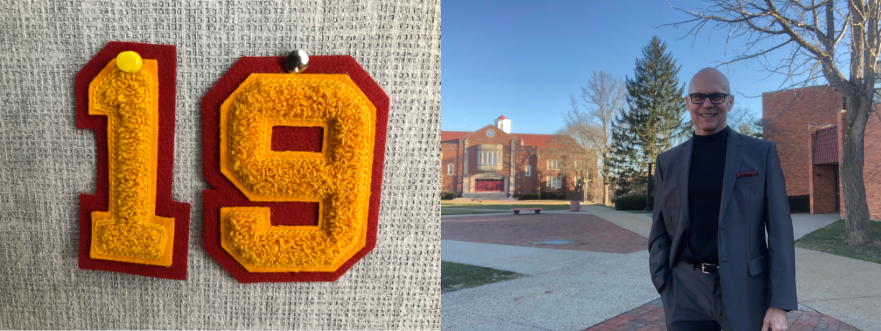
I’m officially a member of the class of 2019…and this is me on Muskingum University’s campus. This is where I’ll start teaching in August.

In the late summer of 1985, I experienced my first day of teaching at Mount Vernon High School in North Central Ohio. That steamy summer day was the inaugural faculty meeting. You know…the one where all the veteran teachers stare at the newbies as they’re introduced. Before my principal, Mr. George Perry began the unveiling process, he paid homage to a retiring teacher. Up stepped a nondescript middle-aged man named Art Cassell. Mr. Perry began, When Art started teaching in the fall of 1955… Those were the last words I heard. I panicked! 1955…1955…I wasn’t alive in 1955. How in the hell does anyone teach high school for 30 years, I thought. Then, I started to project into the future, Will that be me in 2015? Will I be the old guy waddling up there to get my official pat on the back? I’ll be like a museum exhibit. 

I quickly learned, however, that teaching is a wonderful adventure. I couldn’t get over how much I loved the work. I couldn’t fathom in 1985 that I’d still be teaching high school in 2019, but here I am, at least, for a few more days. At the end of this week, I’ll no longer teach high school.

This episode will explain exactly why at this juncture in the spacetime continuum I’m transitioning into a new role. Rest assured, this podcast will continue. In fact, in my new role preparing tomorrow’s educators at the college level, I’ll be inspired to dive even deeper into what creates engaging instruction. And, I’m thrilled that I’m simply migrating to a new classroom. I’ll still be in front of students teaching. Rest assured, this podcast will also continue.

Thanks for listening so far and there’s more to come!

Listen to “120-Where Will Sturtevant be Teaching Next Year?” on Spreaker.

119-The Plickers Class Discussion Extravaganza

I remember late April of my rookie year as a teacher. I was toast! All my great teaching strategies were worn out. I was scrambling trying to find innovative and engaging ways to present lessons. It was a loooooong 6-weeks till summer vacation.

In early June when I did my post-mortem on the year, I vowed to always keep some ideas in the vault for that last 6-weeks home stretch. In fact, I’ve always encouraged rookie teachers to do the same.

I have 5 weeks left of school. The weather is warming up here in the Buckeye state. The springtime panorama, which is the window of my classroom, is getting darned inviting. Conversely, reliable teaching strategies are becoming a bit stale. They’ve worked brilliantly all year, but now with the end in sight, I have to change things up in order to maintain that crucial student engagement.

This episode will focus on using Plickers as a classroom discussion tool. I first learned of this rather amazing platform while I was conducting PD 2 years ago. I was helping teachers individually when one of the attendees asked, Jim…have you ever used Plickers? I responded, No. I listened to her describe the platform and thought, That sounds fascinating and easy. I want to give it a try. I finally got around to it. The last 9-weeks of the year I love experimenting with new platforms. It was high time for my Plickers’ maiden voyage.

Before I describe my lesson, here’s a little Plickers 101:

  • In the Plickers’ Platform, you create a class and then copy and paste in your roster
  • The platform then assigns a Plickers’ Card to each kid
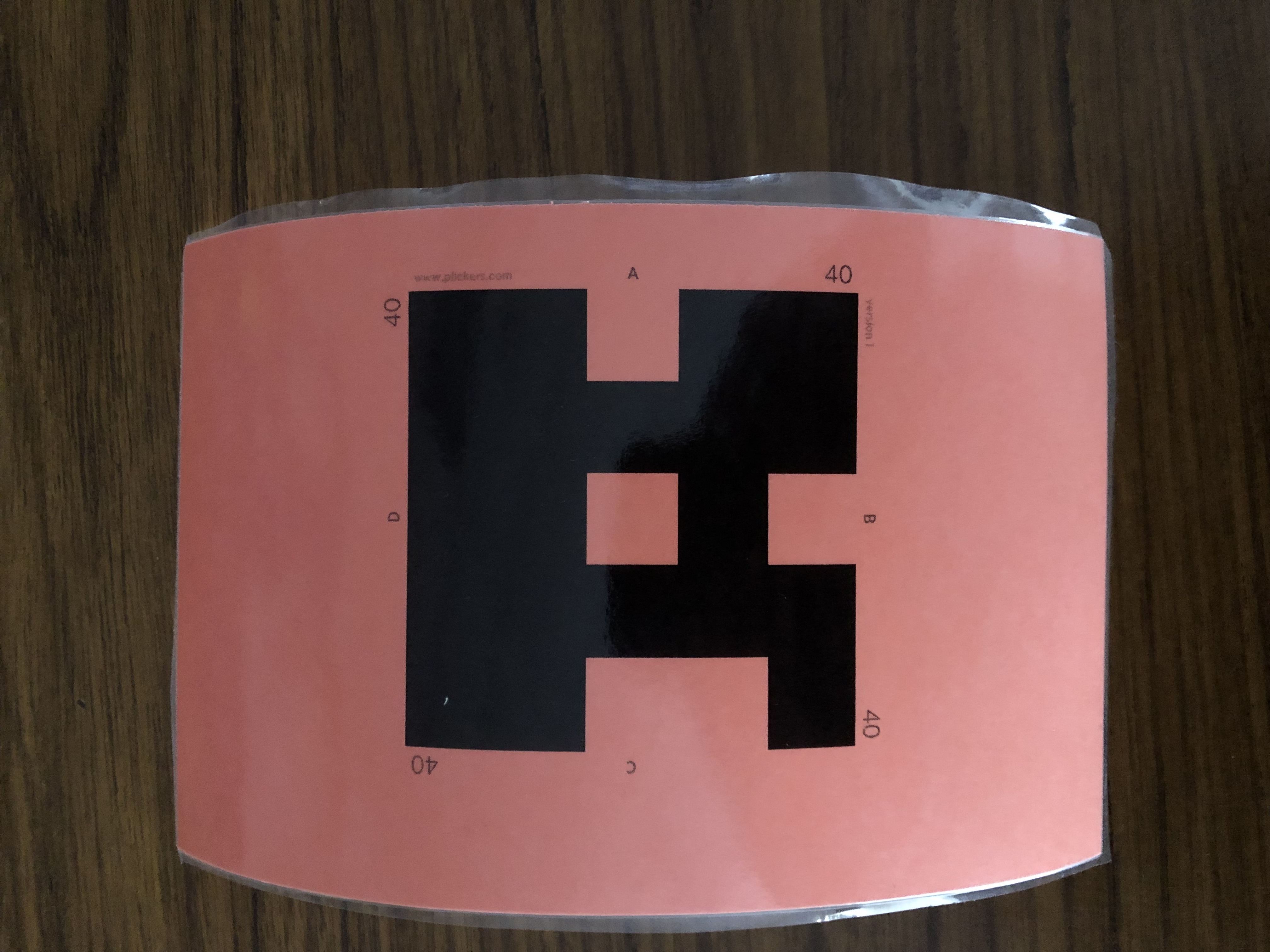
  • Each card looks like a big QR-Code. No technology is required on the student end.

Take note that my cards are on cardstock and are laminated. This a bit time consuming but contributes to longevity

  • When prompted, the students hold up their card and rotate it to reflect an answer that coincides with A, B, C, or D
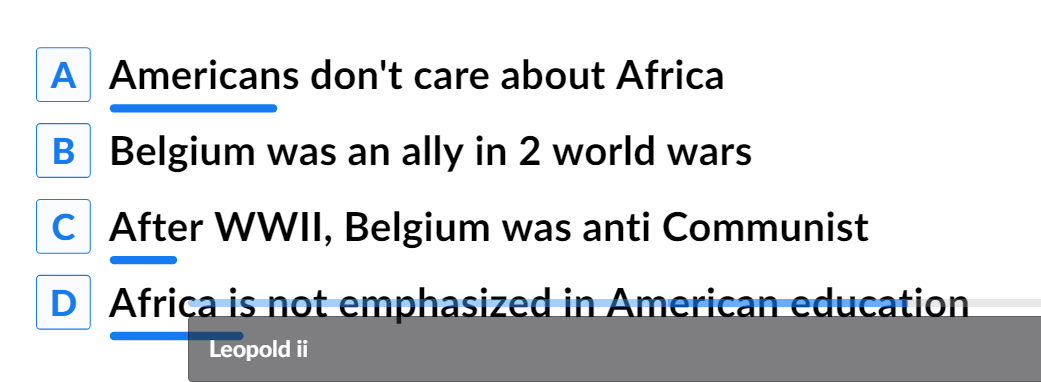
  • You download the Plickers’ App on your phone so you can scan the cards. All their names appear on your projector and turn blue once you’ve recorded their responses.

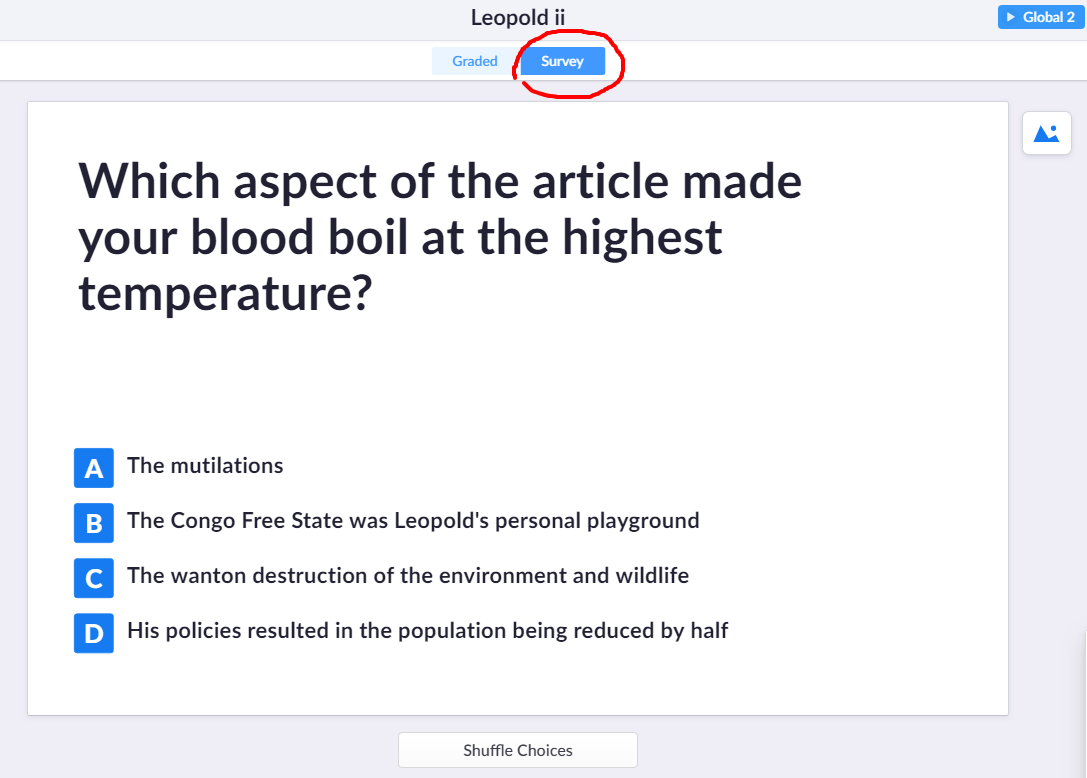
The game-changer for me was the option to conduct a Plickers’ session in Survey Mode.

Everyone participated by displaying their card. I scanned them with my phone and then the responses were broadcasted to the class.

Once all the positions were logged, kids were given the opportunity to claim their position and explain why.

Just as with the Talking Sticks discussion, students were given a self-evaluation rubric. Each kid was required to participate in addition to holding up their card. They were encouraged to elaborate on their response at least twice and to cite the prep material at least twice. Most far exceeded their quotas. This discussion was a lot of fun! Please give it a try.

Episode Template

The Problem:

Even tried and true teaching strategies become stale as the school year starts to draw to a close.

The Solution:

Energize your next structured class discussion utilizing Plickers.

What you can do Tomorrow:

  • Find then assign provocative prep material based on your current unit
  • Create provocative discussion prompts and then upload them to the Plickers’ Platform
  • Download the Plickers’ App on your phone
  • Download and print Plickers’ Cards. 1 set of 40 should last you for years provided that you laminate them.
  • Download my Plickers’ Rubric and morph it to fit your class
  • Pull a few kids out of study hall and perform a dress rehearsal to make certain you understand how to use this platform

Late in the year, you need to be supple and experiment with new teaching strategies to keep them engaged. Plickers is absolutely worth a try.

Listen to “119-The Plickers Class Discussion Extravaganza.output” on Spreaker.

118-Keeping it Fresh with Talking Sticks

I remember late April of my rookie year as a teacher. I was toast! All my great teaching strategies were worn out. I was scrambling trying to find innovative and engaging ways to present lessons. It was a loooooong 6-weeks till summer vacation.

In early June when I did my post-mortem on the year, I vowed to always keep some ideas in the vault for that last 6-weeks home stretch. In fact, I’ve always encouraged rookie teachers to do the same.

I have 5 weeks left of school. The weather is warming up here in the Buckeye state. The springtime panorama, which is the window of my classroom, is getting darned inviting. Conversely, reliable teaching strategies are becoming a bit stale. They’ve worked brilliantly all year, but now with the end in sight, I have to change things up in order to maintain that crucial student engagement.

This episode I’ll focus on keeping my favorite learning activity, the structured class discussion, fresh with the help of a great technique, Talking Sticks. Jen Wilson, who was featured in Episode 117 encouraged me to try this tactic. I was game! Here’s an article from Education World which promotes Talking Sticks, but this activity can absolutely be used at any level. And one final caveat…as with all class discussions, it’s essential that you assign provocative prep material.

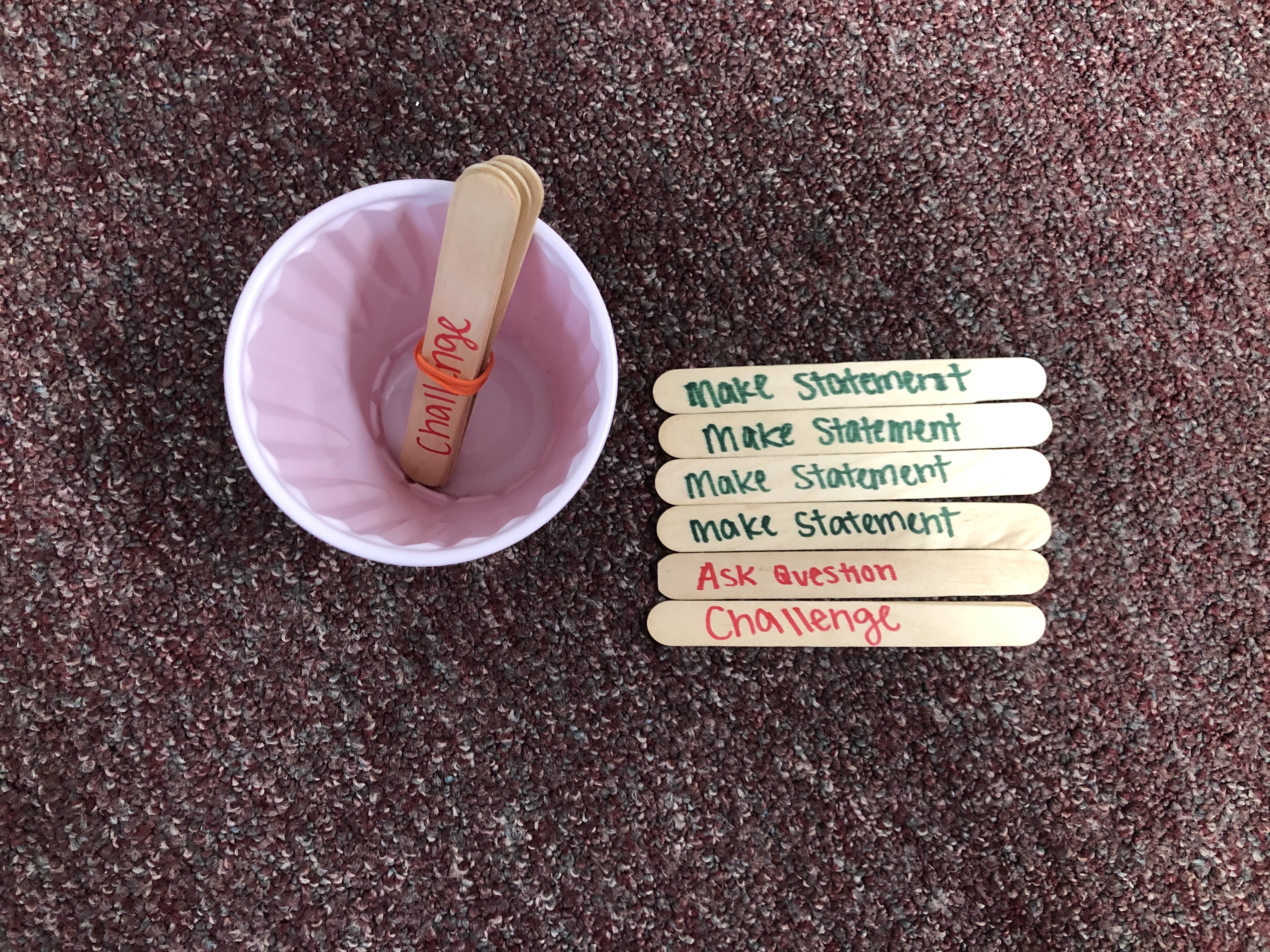
Talking Sticks is truly student-led learning. I broke my class up into groups of 4. I arranged them in these groups in a large area, which in my case was the school library. Each group was stationed at a table. One youngster in the group acted as the moderator. Their job was to manage the discussion topic. They first distributed the six talking sticks to the other members of the group.

Each member of the group got 2 sticks. These sticks were either green, Make a Statement, or red, Ask a Question or Challenge an Idea. Once the sticks were distributed, the moderator came to me to get the prompt:

The moderator returns to their station, reads the prompt, and then encourages participants to chime in. When a group member makes a valid statement, asks a question, or challenges an assertion, they can drop their stick in the cup. When I call time, typically, I’d designate about 5 minutes for each topic, group members who’re empty-handed get full credit.

Then, and this part is crucial, I’d mix the groups. Each moderator would move to a new table and become a standard group member. New Moderators would be selected and the process would begin again. It was an awesome experience and the time period flew by.

An observer complimented me on the self-evaluation rubric that students completed as the conversations unfolded. Feel free to make copies.

Episode Template

The Problem:

Even tried and true teaching strategies become stale as the school year starts to draw to a close.

The Solution:

Energize your next structured class discussion utilizing Talking Sticks.

What you can do Tomorrow:

  • Find then assign provocative prep material based on your current unit
  • Create provocative discussion prompts
  • Download my Talking Sticks Rubric and morph it to fit your class
  • Pull a kid out of study hall and task them with creating the sticks
  • Reserve the Library, or any large space, so that you’ll have plenty of room

Late in the year, you need to be supple and experiment with new teaching strategies to keep them engaged. Talking Sticks is absolutely worth a try.

Listen to “118-Keeping it Fresh with Talking Sticks.output” on Spreaker.