107-Gamify your Next Lesson…Starring Stephanie Howell

In Episode 68, I demonstrated a zero-tech method of including two classic board games into your instruction. In this episode, Stephanie Howell will take gamification to a whole new level.

@mrshowell24

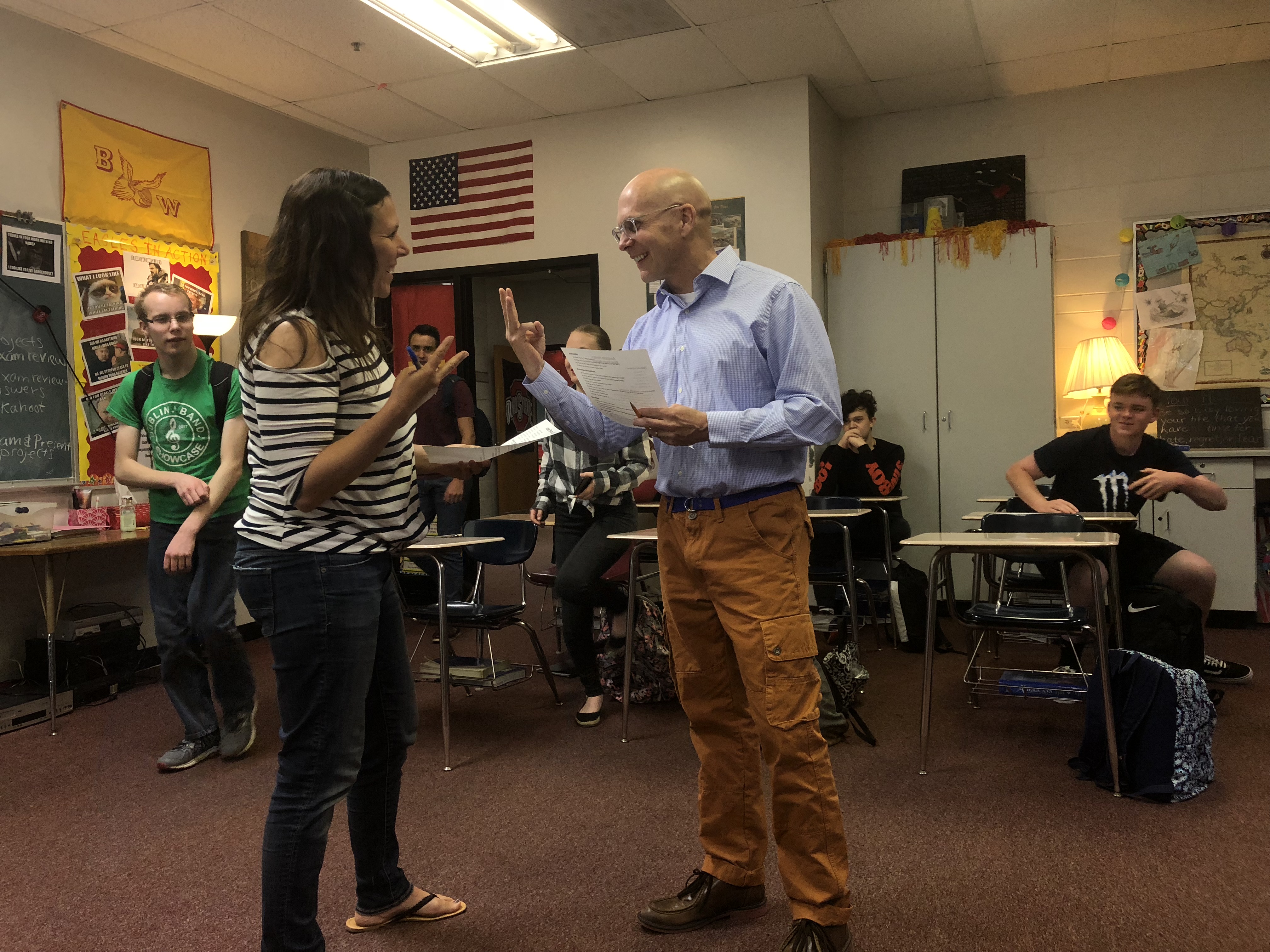
Stephanie is an Instructional Technology Coordinator at the Pickerington Local School District in suburban Columbus, Ohio. Stephanie and I have interacted for a while and I wanted to interview her last year, but we kept searching for the perfect topic. We found it! She’s going to enlighten all of us about gamifying our next lesson. I’m certainly going to try this this fall. Stephanie promotes challenging students to solve a mystery by mimicking the classic board game Clue.

But here, dear listener, is the exciting part. Stephanie has done much of the work for us! After you’ve listened to the episode, watch this 17-minute step-by-step instructional video.  After you grasp the big picture, navigate to this Google Doc. This is your roadmap to an outstanding gamified lesson. Copy any or all of Stephanie’s docs and manipulate them to fit your class.

Episode Template

The Problem:

You need a fresh way to inspire learning.

The Solution:

Gamify your next lesson.

What you can do Tomorrow:

  • Watch Stephanie’s instructional video.
  • Make copies of Stephanie’s resources.
  • Craft an irresistible hook.
  • Create a suspect list.
  • Build the game questions.
  • Plan how you’re going to include student movement.
  • Strategize how you’re going to prevent students from spilling the beans to friends who have your class later in the day.

Gamify your next lesson and introduce, collaboration, engagement, competition, and fun!

Please visit my Amazon Author’s Page.

Listen to “107-Gamify your Next Lesson…Starring Stephanie Howell” on Spreaker.

106-47 Years of Enticing Kids to Lean Forward…Starring Jim Mahoney

Jim Mahoney

Jim Mahoney is a fantastic public speaker. My original intention for this episode was to help teachers improve their presentations. Yes…this interview provides such direction, but as my convo with Jim evolved, it became apparent that teacher presentations was just one layer of onion skin. Jim’s been in the teaching biz for 47 years. He’s been a teacher, coach, principal, central office administrator, superintendent, the Executive Director of Battelle for Kids, and finally…he’s returned home to the classroom. Jim now enlightens future teachers as a professor at Ohio University.

In this episode Jim delves into hooks, transitions, lesson plans, evaluations, reading, presentation, public speaking, storytelling, student-led learning, and more. This is a man that has seen plenty of change and has embraced plenty of change. What shines through is fierce passion for kids and deep wisdom about how to foster learning. Please visit Jim’s website to learn more about him, sign-up for his book notes, or ask him a question. Consider this interview a pep-talk for the 2018-2019 school year!

Episode Template

The Problem: Lesson delivery can grow stale.

The Solution: Experiment with your first day presentation

What you can do Tomorrow:

  • Decide what kids must master that first day.
  • Evaluate how you’ve unveiled these ideas in the past.
  • Craft a marvelous hook. Perhaps, in a subtle way, challenge students to determine the relevancy of your subject. For ideas on hooks, check out this episode. 
  • Create a brief opening presentation which includes some biographical info and some broad course objectives. Encourage audience participation in this presentation. For ideas on how to include student participation in your presentations, check out this episode. 
  • Plan how to challenge students with a problem. A marvelous activity would be for groups to peer-teach classroom procedures. For ideas on promoting classroom procedures, check out this episode.
  • Incorporate a segment for debriefing.
  • Consider how to utilize this template in future lessons.

Commandeer an idea from this episode and use it on Day 1. You may discover a wonderful template that facilitates profound learning.

Listen to “106-47 Years of Enticing Kids to Lean Forward…Starring Jim Mahoney” on Spreaker.

105 Knight Lab Transforms your Kids into Digital Bards…Starring Michael Brilla

I loved being a student. Sometimes as a teacher, I’d like to trade places with my students. I enjoy learning. Well in this episode, I get to do just that! Michael Brilla is a fabulous middle school history teacher from Pottstown, Pa. Here’s Michael with his lovely family:

@Mr_Brilla

Michael is my teacher and I’m his student. He’s going to school me about digital storytelling.

I’m reading a fascinating book called Talk Like TED by Carmine Gallo. Carmine evaluates the presentation styles of the most popular TED presenters. One common thread is powerful storytelling. Teachers have a responsibility to help kids evolve as storytellers. It’s an essential skill. Michael Brilla and I became acquainted on Twitter. He promoted the idea of digital storytelling. I was instantly intrigued. Michael’s platform of choice is Knight Lab.

Knight Lab is a free platform gifted to the world from a team of brilliant, talented, and creative faculty and students at Northwestern University. Job 1 when I return to school in one month is to master this powerful platform. I was thrilled to listen to Michael because he’s already utilized it extensively and successfully. In this episode, Michael highlights his student’s creation of Timelines and Story Maps. Please visit these links and marvel at what Michael’s kids created. Digital storytelling has great potential!

Episode Template

The Problem:

Students need to tell more stories.

The Solution:

Utilize Knight Lab and transform your kids into digital bards.

What you can do Tomorrow:

  • Play around on the Knight Lab platform.
  • Prompt students to illuminate an audience about the steps or stages of a process. It could be an epoch of history, the events in a story, the stages of the scientific process, a story problem in math, the process of completing a recipe or art project.
  • Have student teams craft a story that describes each step along the journey.
  • Prompt teams to then tell their stories utilizing the Knight Lab platform.

Storytelling is an essential skill. Knight Lab empowers kids to tell their stories in an ultra creative and engaging fashion!

Listen to “105 Knight Lab Transforms your Kids into Digital Bards…Starring Michael Brilla” on Spreaker.


104-Please try a SILENT Socratic Seminar…Compliments of Peergrade and the Stanford History Education Group

Socratic Seminars are a big part of my class. The students circle-up and then dissect complex topics. These are highly engaging, collaborative, and provocative sessions. We do them a lot. However, even if you thoroughly enjoy something, like the taste of a Reese Cup (the relevance of which I’ll explain in the episode), if you do it too much…the magic is lost. I’m always looking for ways to improve engagement in class discussion. My kids are totally down with Philosophical Chairs, which I consider a highly successful experiment. A few months ago I ventured down a new a path, the Silent Socratic Seminar. Even as I read the last sentence, it seems absurd. How can you have a class discussion if no one says anything?

This episode will demonstrate how you can do just that. I utilized two platforms:

The kids prepared for the seminar via the Stanford History Education Group and then collaborated, not verbally, but through writing via Peergrade. Peergrade is the 21st Century version of trade and grade, but this version is far superior to the days back in grade school when you evaluated your neighbor’s spelling quiz when prompted by your teacher. But unlike trade and grade, Peergrade is totally anonymous. My experience has been that anonymity equates to authenticity.

For our Silent Socratic Seminar, we explored the partition of India. Here were the directives I gave my kids. Students submitted their work to Peergrade, which then distributed it to peers randomly and anonymously. Kids then evaluated their peers based on the rubric I set up. Here’s a screenshot of mine for the Silent Socratic Seminar on Indian Partition.

What I observed in the silent circle was fascinating. It was incredibly silent. For fifteen minutes, students evaluated in a trance-like state. Then, once kids got their feedback, they leaned forward once again absorbed in what they were reading. Student engagement was evident. I highly recommend this tactic.

Episode Template

The Problem:

Even the best class discussion tactics grow stale.

The Solution:

Try a Silent Socratic Seminar.

What you can do Tomorrow:

  • Secure great sources from the Stanford Education Group
  • Investigate Peergrade
  • Create a writing prompt for students to submit to Peergrade
  • Create student rubrics they’ll apply to peer essays they receive via Peergrade
  • Prompt kids for feedback at the conclusion

A Silent Socratic Seminar is a fresh approach to class discussions.

Listen to “104-Please try a SILENT Socratic Seminar…Compliments of Peergrade and the Stanford History Education Group” on Spreaker.

103-Authenticity is how Steady Teddy Bonds with Kids…Starring Ted Diepenbrock

@TedDiepster

I’m exposed to fascinating guest through common interactions on Twitter. Ted Diepenbrock is one such person. We bantered back and forth about what to discuss in this interview. We settled on bonding with students, while at the same time, empowering them by giving them choices in learning. This is a fine topic and we discuss it thoroughly. But one message came through strongest as I edited our convo:

To bond with kids you have to be authentic.

Ted is authentic. He’s a calm and kind presence in his student’s lives. His commitment to bonding with students and his commitment to giving kids choice shines through, but I kept thinking as we spoke about the Myers-Briggs Personality Profile. This measurement determines what gives one energy. For those familiar, I am an ENFP. I’m Extroverted, I’m Intuitive, I’m Feeling, and I’m Perceiving. If you’re interested in taking an online version of the Myers-Briggs, head to this link.

Ted and I are different. I have the personality of a game show host. This might seem conducive to teaching high school students, but that’s a generalization. I’ve had kids in class that just flat didn’t care for me. There haven’t been many such youngsters, but I can think of a few. My lack of rapport with these kids bothered me. One brave dissenter finally told me that it was my personality they found off-putting. “You’re just so hyper”, she informed. This didn’t make me feel good, but it definitely altered the way I tried to interact with this kid and the way I tried to interact with standoffish kids moving forward. This somewhat painful episode demonstrated that it takes all kinds to teach. While Steady Teddy might score very different on the Myers-Briggs than me, he might of been a better fit for my students who struggle with my over-the-top personality.

As you listen to Ted, understand that you are what you are. You don’t need to try to be something different.

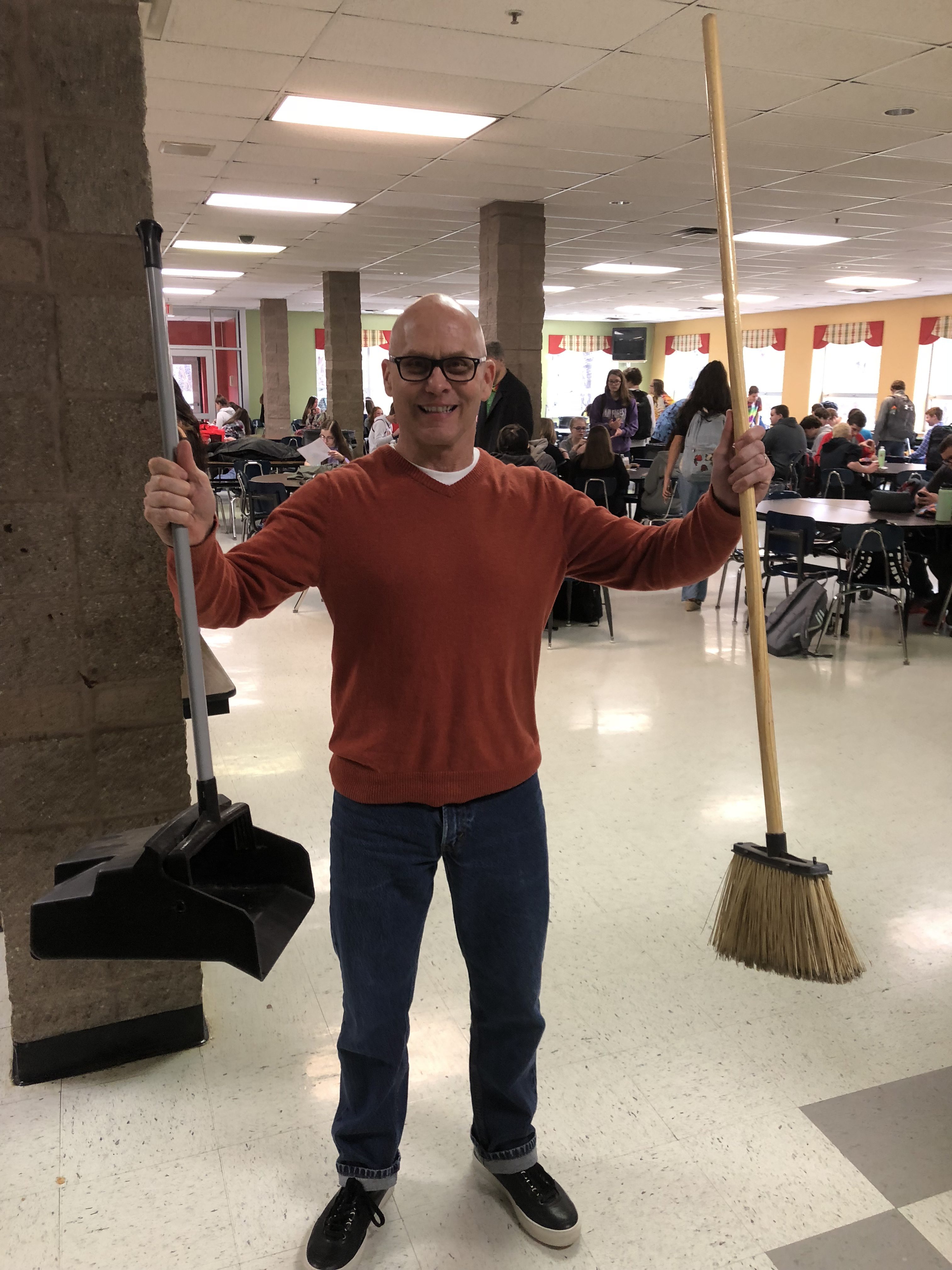
Oh…and finally, here’s that promised image of yours truly sweeping the floor at lunch:

Episode Template

The Problem:

It’s tough to bond with kids.

The Solution:

Be yourself, be approachable, and strive to personalize instruction.

What you can do Tomorrow:

  • Take the Myers-Briggs online assessment
  • Strive for authenticity
  • Greet your kids at the door
  • Personalize instruction

Please never try to be anything but exactly what you are.

Listen to “103-Authenticity is how Steady Teddy Bonds with Kids…Starring Ted Diepenbrock” on Spreaker.

102-Unleash your Student Technocracy…Starring Brennan Daugstrup and Shawn Sherburn

The Blog and Shrapnel

Brennan Daugstrup (The Blog) and Shawn Sherburn (Shrapnel) make me feel great in this episode. If imitation is the sincerest form of flattery, then classify me as flattered to the hilt. These wonderful young guys are highly complimentary of my flipped lectures. Here’s a brief example. But what really frosted my educational gourd, was being informed by my two young friends that when prompted to make videos, they use mine as a template. I hope you enjoy this conversation as much as I treasure their endorsement of my teaching style. Additionally, they teach me about some cool platforms, one of which I’m determined to utilize. Their ingenuity and creativity are why I labeled them technocrats.

Before I delve into specific directives about student video production, here’s their fascinating video. The platform the Blog and Shrapnel employed was Adobe Premier. They had access to this pay-platform because it was part of their Multi-Media class. Wonderful student video production, however, can be done with free platforms such as Apple Keynote, which is my favorite, or Google Slides paired with Screencastify. My young men also mentioned utilizing Discord which is like Skype for gamers. Apparently, players can talk to one another inside a game. And finally, they promote Incompetech. This is a resource where kids can get free background music, something I highly suggest.

The Blog and Shrapnel were also highly complimentary of Edpuzzle. I featured this cool interactive platform in Episode 42 of the Hacking Engagment Podcast. Please go back and give a listen if you’re interested. Perhaps, kids could embed some interactive and provacative prompts in their video creations and assign them to classmates.

Episode Template

The Problem:

Students who are gifted technocrats need more creative freedom.

The Solution:

Prompt your kids to produce short videos and challenge them to explore and perhaps utilize different platforms.

What you can do Tomorrow:

  • Assign a video prompt and limit students to productions between 1 and 2 minutes in length.
  • Assign roughly 4 or 5 topics. If you have a class of 25, that means 5 students will be doing the same topic. That’s okay because perhaps they could help one another. Regardless, they’ll only be presenting to small groups, so students won’t be overwhelmed with reruns.
  • Demand that your student’s videos be image or action-rich and text poor.
  • Challenge kids to include background music
  • Discourage students from pedestrian humor, such as comic violence. Instructive humor, however, is highly encouraged.
  • Regardless of the platform, once kids have a video file, they should upload it to YouTube.
  • Investigate challenging students to embed prompts and then assign their videos to classmates via Edpuzzle.
  • Create small presentation groups via a class landing pad, which will be a Google Doc in CAN EDIT MODE. Place all of your student’s names on this doc and organize them into their small presentation groups. Once kids have their YouTube link, they should copy the URL and then apply it to their names on the landing pad. That way, if a student is missing on presentation day, they may have already applied their link and students in their group could watch anyway. Or, if a student did not do the assignment, members of their group can watch another student’s video in a different group.

Don’t box-in tech-savvy kids. Permitting more creative freedom just might unleash your own classroom technocracy.

Listen to “James Sturtevant Hacking Engagement” on Spreaker.

101-Meet me in the Agora, the Zero Tech Road to an Epic Class Discussion…Starring Mel Eckelbarger

It’s tough to get students to participate in class discussions. It’s tough to keep track of all the tech tools I toss out in this podcast. Well in this episode, I’m determined to alleviate both of these frustrations. I’ll provide an engaging and fun class discussion tactic, which will only require great sources, provocative prompts, a stopwatch, 1 sheet of paper, and a pen or pencil.

The Agora was the square in an ancient Greek city-state. The Greeks took democracy seriously. Participation was mandatory, juries were massive, being informed was a must. The Greeks accomplished what we try to do in all of our Social Studies classes daily…foster citizenship.

I became exposed to the appointment book method of discussing at a PD session many moons ago. I was impressed, but perhaps not that impressed because I totally forgot about it. I did not invent this tactic, but like most teachers, I beg, borrow, and steal, morphing as I go. This past month, I needed a new tactic to employ in an upcoming class discussion. For some odd and welcomed reason, I remembered the PD appointment activity. Eureka…I had my idea and I called it Meet me in the Agora! It went so well that I shared it with my friend, colleague, and neighbor Mel Eckelbarger. Mel utilized my Meet me in the Agora tactic the next day and was most pleased with the results. We’ll discuss the particulars of this tactic…how to set it up, execute it, and we’ll even troubleshoot Meet me in the Agora.

Mel and I meet in the Agora

Episode Template

The Problem:

It’s difficult to secure high levels of student participation in class discussion.

The Solution:

Utilize the Meet me in the Agora tactic.

What you can do Tomorrow:

  • Review the Sneetches Doc that Mel I referenced in the episode.
  • Review this Google Doc which you’re free to utilize. It’ll give structure to the appointment securing free-for-all. This example was from our discussion on the Rape of Nanking.
  • Assign compelling sources.
  • Compose provocative prompts.
  • Clear the desks out of the center of your room creating an Agora
  • Indicate to students that they are not to discuss prompts in the appointment phase.
  • On your signal, have students meet in the Agora and discuss the assigned prompt. Time this event and when the time is up, direct kids to return to their seats and prep for next prompt.

The Meet me in the Agora tactic is a fun, engaging, zero-tech, and highly structured method of dramatically enhancing class participation.

Listen to “101-Meet me in the Agora, the Zero Tech Road to an Epic Class Discussion…Starring Mel Eckelbarger” on Spreaker.

100-Surviving 33 Years in the Classroom…Starring Kevin Ellinwood

I started this podcast in the summer of 2016. I just had completed my book Hacking Engagement. The podcast was meant to supplement the book. There are 50 hacks in Hacking Engagement. My objective in 2016 was to produce 50 episodes. It seemed like climbing a mountain. It was hard to fathom producing 50 episodes…and yet I did. I had so much fun that I went ahead and produced 100!

This episode is a celebration of this achievement. I interview Kevin Ellinwood.

Kevin Ellinwood

Kevin, like me, is completing his 33rd year in the classroom. Please enjoy this show as we reflect upon 33 glorious years amongst thousands of young people. No episode template…just listen, enjoy, and thanks so much for your loyalty!

Listen to “100-Surviving 33 Years in the Classroom…Starring Kevin Ellinwood” on Spreaker.

99-If the Statue of Liberty were a teacher…how would she handle kids who struggle with English? Starring Diann Espinoza

America is changing. According to Pew, by 2050 the US will be 29% Hispanic. If you don’t have kids in your class who struggle with English, you will in the future. If you have students who struggle, expect a lot more. I’ve spoken to colleagues who’ve experienced such students. Many of these educators expressed frustration. They lack training and resources. In prepping for this episode, I concluded that teachers need to strive to be like the Statue of Liberty…SAY WHAT!?!

“Give me your tired, your poor, your huddled masses yearning to breathe free, the wretched refuse of your teeming shore,” she wrote. “Send these, the homeless, tempest-tossed to me, I lift my lamp beside the golden door!”

The golden door is an education. Embrace these youngsters. Think how stressful it is for them to not feel free to express themselves.

In this episode, I interview a bilingual champion by the name of Diann Espinoza.

Diann Espinoza

Diann teaches Science at South Meadows Middle School in Portland, Oregon. Diann’s wonderful school fully embraces bilingual education. Below are some of Diann’s ideas on how to help students succeed who struggle with English:

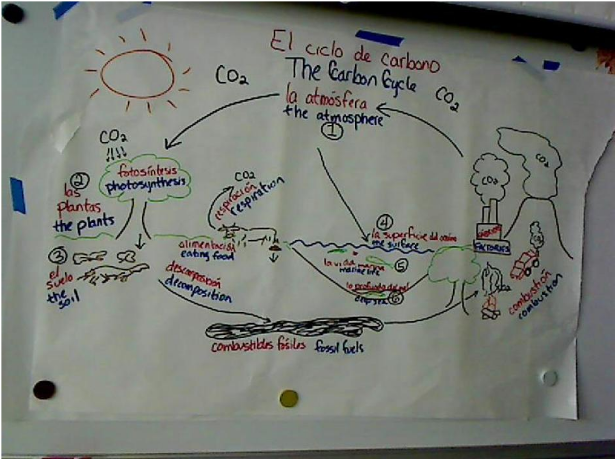
Bilingual teachers must assist students with strategies for bridging the two languages. There are specific methods that we learn to employ like showing students words that mean the same and look very similar in both languages, these are called cognates. We do lessons where we make anchor charts with the students that have color-coded bilingual components pointing out the prefixes that are used commonly in each language or things like tricks they can use when they are working in English that give them clues from the Spanish that they know or vice versa. An example would be adjectives that end in -ly in English tend to end in -mente in Spanish like (actually and actualmente).  We also use TPR and diagrams or drawings with bilingual labels that have been added during a lesson with all of the students. These resources stay on the walls for reference.

One of the hardest things about being a secondary bilingual science teacher is finding connections with others who do the same thing. I attended a national conference this summer and connected with another middle school science teacher. It is his first year this year and the first year for his school to add a dual language program. We have communicated a bit but mostly I feel that I am the one who is sharing everything that I have learned as a solo teacher from trial and error.

There is a difficulty with students wanting to speak in the language of power (English, of course), especially as they get older and in middle school most of the time I hear them conversing in English. Their lack of enthusiasm for learning in Spanish puts a dent in their progress and therefore, presents a troubling challenge. 

One thing I can think of right away is encouraging these students to do their initial thinking and writing in their native language so that they can organize their thoughts and then work from there to complete the work in what limited ways they can in English. This is called translanguaging. Often in bilingual learning spaces teachers encourage students to do this so they can see what students know how to do in each language. Over time they find that the writing produced is more detailed

Another is to have them produce vocabulary work in English but then to also have a space on the activity for them to write the word and maybe a definition or a sentence in their own language too.

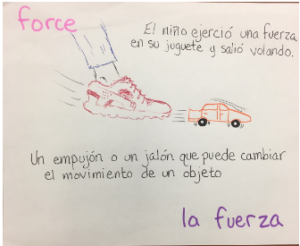
This is a picture of an example vocab poster that my dual language class made with the word in English and also in Spanish.

Finally, when new unit vocab is introduced, have a word wall or other shared place where the whole class can see. Ask students of other native languages to bring the words from home for the new vocabulary and include those in that space for all to see.

In this way, the home language and culture is honored and they can see that their contributions are appreciated. If you make this a practice from the beginning, then hopefully they will not feel stigmatized or weird for using their home language but rather, if the teacher creates the expectations, they will feel more confident that they have a treasure to draw from and even an advantage for their learning success, because they actually do!
Diann Espinoza

My favorite ideas is to merely take the HyperDoc, which represents the lesson prompt, and translate in Google!

Episode Template

The Problem:

Many teachers are at a loss with how to help kids who struggle with English.

The Solution:

Implement Diann Espinoza’s ideas.

What you can do Tomorrow:

  • Develop empathy for kids who struggle with English.
  • Translate your lesson prompt HyperDoc. 
  • Encourage kids to initially express in their native language.
  • Utilize images and drawing.
  • Unleash physical expression.
  • Foster relationships with students who may feel isolated.

America is becoming more diverse. Embrace the future. Help kids who struggle with English. They need you!

Listen to “99-If the Statue of Liberty was a teacher…how would she handle kids who struggle with English…Starring Diann Espinoza” on Spreaker.
98-StoryboardThat will Transform your Kids into Editorial Cartoonists

When I was a young teacher, I used to bring my newspaper to study hall. Students would perch on their desks and observe me like vultures. As soon as I was done with the Sports Section, or the Life Section, they would swoop down and devour it! Today, I’m not sure kids could identify a newspaper in a police lineup. What I loved the most about consuming the newspaper each day was the Comic’s Page and the Editorial Cartoons. Unfortunately, I don’t get a paper anymore. My exposure to comics has diminished significantly. I miss them!

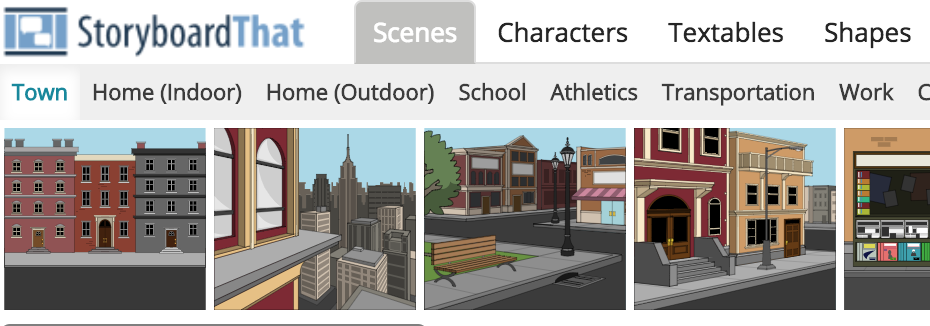
So…in this episode, I’ll demonstrate how to revive this wonderful medium with the help of a tremendous tech tool called StoryboardThat. I’ll also give non-humanities teachers an idea on how they could use it in their curriculum.

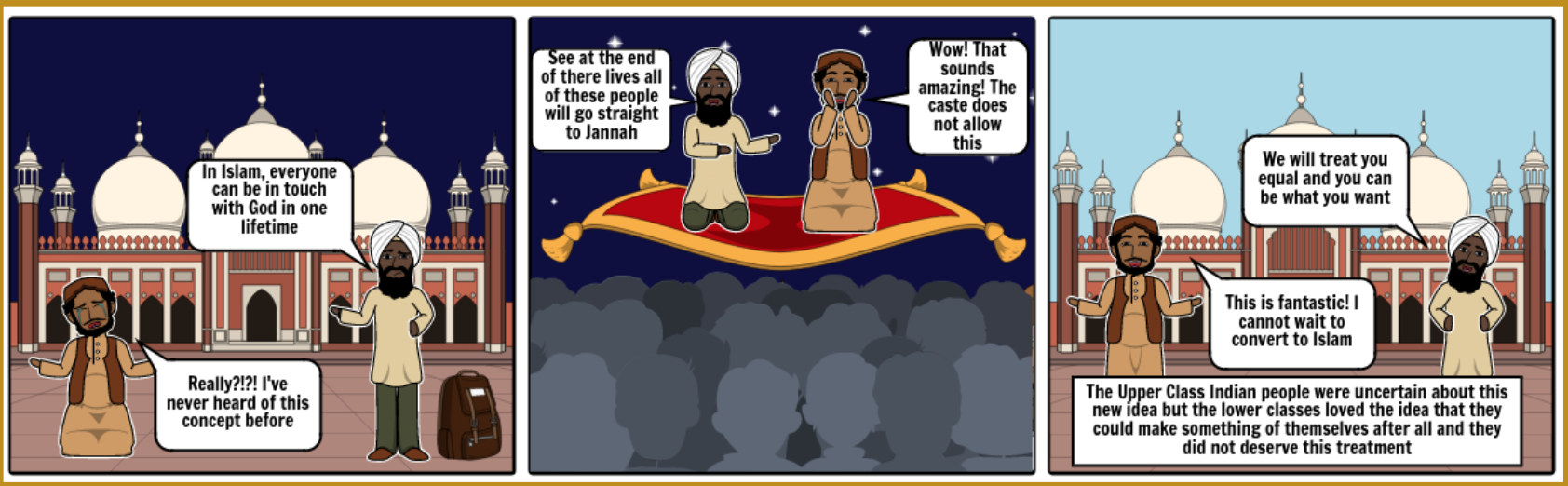
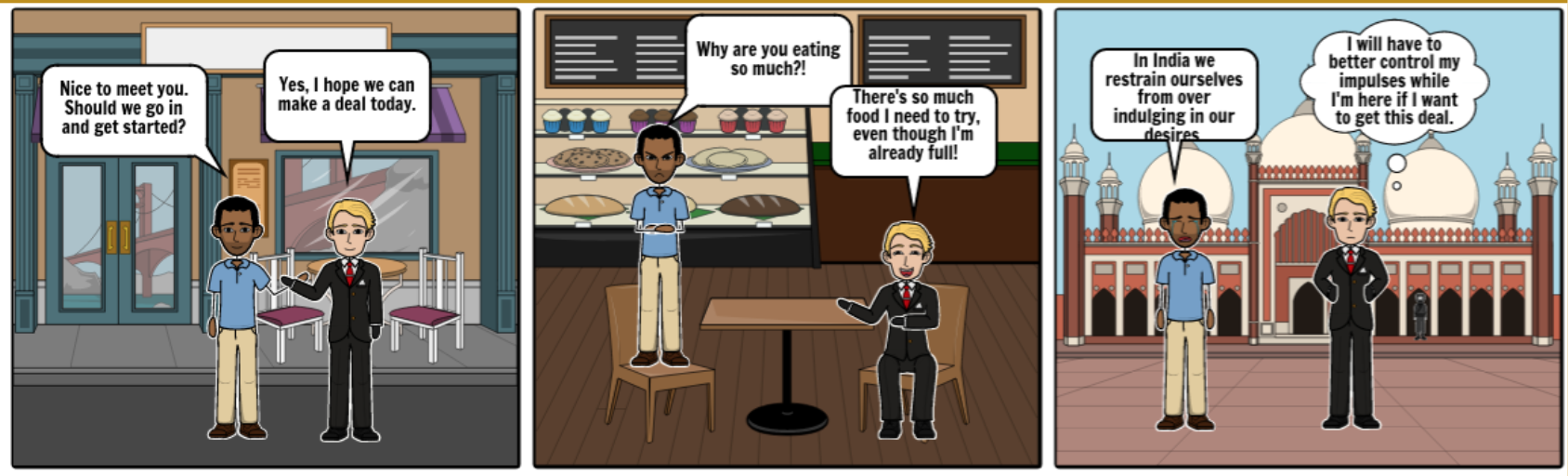
To start, however, I must explain the prompt I layed on my kids. Episode 92 featured Brad Gosche of the Columbus Council on World Affairs. He introduced me to Geert Hofstede and the Country Comparisons Model. My lesson built off this exposure. My students were required to craft a comic where they played the role of a Westerner attempting to interact with India. Here is a link to the HyperDoc I assigned on Google Classroom. Students then created amazing 3-panel comic on StoryboardThat fulfilling these 3 jobs:

Panel 1:

You’re a foreign power describe YOUR OBJECTIVE in India. It could be setting up colonies in the past, or doing business in the present.  

Panel 2:

Describe the applicable CULTURAL DIMENSION.  

Panel 3:

Indicate how your ADJUSTED APPROACH will succeed.

Finally, kids shared their comics with classmates on a class Google Slide presentation.

Episode Template

The Problem:

Comics are an underutilized medium for student expression.

The Solution:

Challenge kids to create with StoryboardThat.

What you can do Tomorrow:

  • Become familiar with StoryboardThat by creating your own comic.
  • Craft a 3-panel comic prompt.
  • Demonstrate to students some of the StoryboardThat featured in this episode.
  • Create a Google Slide presentation to act as a landing pad for finished comics.

Your kids will have an absolute blast with this tool. They also will demonstrate deep understanding about their topics.

Listen to “98-StoryboardThat will Transform your Kids into Editorial Cartoonists” on Spreaker